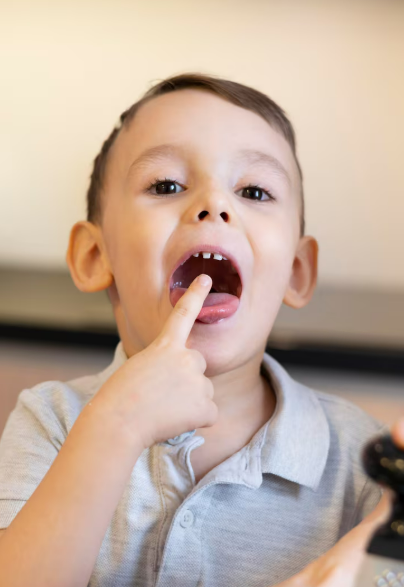
Speech therapy is a waste of time and money if your childs tongue can’t physically reach the roof of their mouth. You have probably sat in a pediatricians office, worried about your childs words or messy eating. They might have told you that your child will grow out of it. This advice ignores basic human anatomy. A thick, tight or short band of tissue under the tongue holds the tongue down. It acts like a brake on a muscle keeping it pinned to the mouth floor. This makes it hard for your child to speak clearly or eat properly. The tongue is a muscle for these actions. A tight band under the tongue can cause problems. It can make speech therapy hard or useless. You should consider your childs tongue and its movement. The band of tissue, under the tongue can be a problem. It can affect eating and speech. Speech therapy might not work if the tongue can’t move. Your childs tongue might be stuck. The tight band can cause issues.
Analytical parents try to find the reasons behind issues instead of just dealing with the symptoms. A tongue restriction can change how your child talks. It can also hurt their facial growth and breathing at night. The tongue helps shape the jaw by pushing against it when its at rest. When the tongue is trapped the upper jaw gets smaller teeth get. The nasal passage gets smaller. If you catch these issues early you can prevent a lot of other problems, with bones and breathing from happening. It’s good to spot these problems so they don’t become permanent.
The Swallowing Shift: How Compensation Mimics Picky Eating
When you eat your tongue needs to move down to help you swallow food properly. It is like a wave that goes up against the roof of your mouth to push the food back.. For kids who have a big problem with their tongue this does not work. They cannot move their tongue up and down like they should. So to get the food down they have to use muscles to help them. They use the muscles in their face like their cheeks and lips and the muscles in their neck to push the food really hard. This is not how the tongue is supposed to work when you swallow food. The tongue is supposed to do the work, not the cheeks and neck muscles. But for kids, with a tongue problem their tongue cannot do its job so other muscles have to take over.
Dinner time is really tough for kids with a tongue. It is a physical chore. Kids with a tongue are usually the last ones sitting at the table. They are still. Chewing or they put food in their cheeks like chipmunks. This is because swallowing food takes a lot of effort for them.They do not like to eat meats and raw vegetables. This is not because they are being picky. Because their mouth has a hard time breaking down these foods. Kids, with a tongue have a hard time with this.
| Daily Activity | Normal Oral Function | Impact of a Tied Tongue |
| Eating & Swallowing | Clean, quiet upward wave | Forward thrust; heavy cheek straining |
| Speech Delivery | Easy lift for L, T, D, N sounds | Mumbled delivery; heavy jaw pumping |
| Jaw Development | Wide, flat, spacious upper arch | High, narrow roof; crowded teeth |
| Sleep Posture | Tongue suctions to the upper palate | Tongue drops back, blocking the throat |
If your child needs a massive gulp of water to wash down every single bite of chicken, you are looking at an anatomical roadblock. Treating this as a behavioral discipline issue ignores the destructive swallowing pattern that is actively collapsing their dental arches.
Craniofacial Distortion: The Structural Link to Dental Crowding
A child’s dental arch shape comes down to a constant physical tug-of-war. The outward pressure of the resting tongue fights the inward pressure of the lips and cheeks. When a tongue restriction takes the tongue out of the fight, the inward forces win the battle entirely.
Without the broad, flat pressure of the tongue resting against the roof of the mouth, the upper jaw collapses into a narrow, V-shaped vault. This steals the physical perimeter space that incoming adult teeth desperately need to grow in straight. The lower jaw then gets physically locked behind this narrow upper arch, pulling the chin backward and driving severe orthodontic crowding.
Consider a nine-year-old girl who was recently brought into a specialized airway practice. Her parents were told she needed four healthy adult teeth pulled to make room for braces, and they wanted an analytical second opinion. The clinical exam revealed a severe, undiagnosed posterior tongue restriction that had been entirely missed since she was a baby. Her tongue could only lift a fraction of its normal range, her upper jaw was severely narrowed, and her sleep tracking showed she was constantly waking up because her pinned tongue was blocking her airway.
The solution involved releasing the tight tissue anchor completely, followed by myofunctional therapy to teach the muscle how to lift. Once the tongue could finally rest on the palate, a gentle orthopedic expander widened her arch naturally over nine months, saving all four adult teeth. Her mouth breathing stopped, her nasal airway opened, and her chronic fatigue vanished because her body stopped fighting for oxygen at night.
Extracting healthy teeth to fix crowding without checking for an anchored tongue is like trimming a door because the house foundation is sinking.
Real Speech Issues: The Hidden Strain of Lingual Sounds
There is a problem in the way we take care of kids. We think that if a kid can talk then their tongue is working okay.. That is not always true. Kids are really good at finding ways to do things when something is not working right. A kid who has a tongue that does not move well will use their jaw and the muscles in their neck and lips to make the sounds they need to make. They do this to make up for the fact that their tongue is not working like it should. Kids, with tongue problems will use these parts of their body to force out the sounds they want to make.
The way they talk sounds really strange like their words are all muffled or blurry it is as if they have a lot of marbles in their mouth. The child has to try a lot than the other kids in their class to say things clearly which makes them get really tired when they have to read out loud. If the problem, with their tongue is not fixed then after many years of going to speech therapy, which can be very expensive the child will still have trouble speaking properly because their tongue is not able to move the way it needs to speech therapy will often not work for the child.
Finding these structural links requires stepping away from traditional, high-volume dental chains. An environment like the Best Pediatric Dental Clinic for Kids ensures your child is assessed using functional criteria that connect the dots between jaw growth, breathing dynamics, and oral surgery.
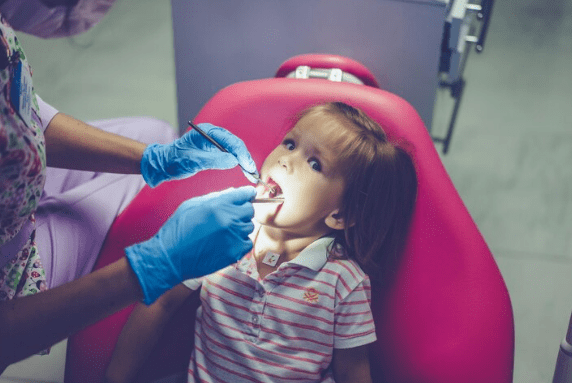
To fix this tether you need to be very careful which is why it is best to go to a Tongue Tie Clinic. At the Tongue Tie Clinic there are specialists who use dental lasers. These dental lasers help to get rid of the tissue that is causing the problem.The good thing about this procedure is that it does not hurt and you do not bleed. It takes a short time less than three minutes and the specialists do not need to use any stitches. This makes it a lot easier for kids who get nervous. The dental lasers used at the Tongue Tie Clinic make the whole process easier for kids and adults who get anxious, about these things.
The Sleep Equation: Why a Tied Tongue Drives Airway Collapse
When a child falls into a deep sleep, their muscular system completely relaxes. An un-tethered tongue stays safely suctioned against the roof of the mouth, keeping the throat wide open. A restricted tongue drops down and slides straight backward, physically blocking the airway every single night.
This blockage forces the brain to constantly wake the body up out of deep sleep just to gasp for air. The child will toss and turn aggressively, sweat through their sheets, or grind their teeth heavily in an unconscious attempt to push their lower jaw forward and open the airway. This brutal cycle of sleep fragmentation robs the brain of critical rest, which frequently shows up during the day as erratic focus, behavioral meltdowns, and even a false ADHD diagnosis.
Releasing the structural anchor is the only way to stop this exhausting neurological loop. Training the tongue to live at the roof of the mouth keeps the airway open naturally, allowing your child to finally sleep deeply and develop balanced facial proportions.
Frequently Asked Questions
Why was my child’s tongue restriction missed by our pediatrician?
When doctors check kids they usually look for problems with the tongue like when the tongue has a big notch in it shaped like a heart.. Sometimes there are problems at the back of the tongue that are hard to see. These problems are hidden under the lining at the back of the tongue. The tongue might look totally fine. There is still something stopping it from moving up to touch the roof of the mouth. The tongue is supposed to be able to lift up and touch the palate. The posterior oral restrictions or the problems, at the back of the tongue get in the way. The tongue looks normal. The problems are still there and they can cause trouble. The tongue has trouble lifting upward to touch the palate because of these oral restrictions.
Will releasing oral restrictions instantly fix my ten-year-old child’s speech?
The surgical release only helps with the range of motion. It does not get rid of the muscle memory that people have built up over the years. Older kids need to have therapy to help them use their mouth and face muscles correctly. They need this therapy before and, after the release. This therapy teaches the muscles that were freed by the surgery how to work when they swallow. The muscles need to learn how to move down properly when people eat and drink. They should not have to rely on habits of using their cheeks and neck to help them swallow.
How does an unreleased tongue restriction impact a child’s posture?
The tongue is structurally tied to the deep fascia chain running down the front of the neck and into the core. When the tongue is pinned downward, the body compensates by pulling the head forward and tipping the chin up to manually open a crowded airway. This directly causes chronic neck tension, rolled shoulders, and poor forward-head posture.
Is a laser release painful for a child who is terrified of the dentist?
Dental clinics these days use lasers for hard tissue that stop the nerve endings and blood vessels from hurting right away. The dentist just moves the laser through the tissue and it does the job. This whole thing takes a few minutes. You do not feel any vibrations. Hear any loud noises from a drill. The dentist also uses a gel to numb the area so you do not feel anything. This makes it really good for kids who get nervous when they go to the dentist. Dental clinics and dental lasers are great, for kids because they make the whole experience calm and not scary all. Dental lasers are very helpful.
When you leave a jaw or mouth structure alone it can be really tough for your child to deal with speech problems, crowded teeth and not sleeping well. The thing is your childs body is working against them. To really help your child you need to find the problems in their mouth and fix them while their face and jaw are still easy to change. This way you are helping your childs development. Making things easier for them. Finding the core issues with the mouth like a structural tether and fixing them is what true developmental protection is all, about.