
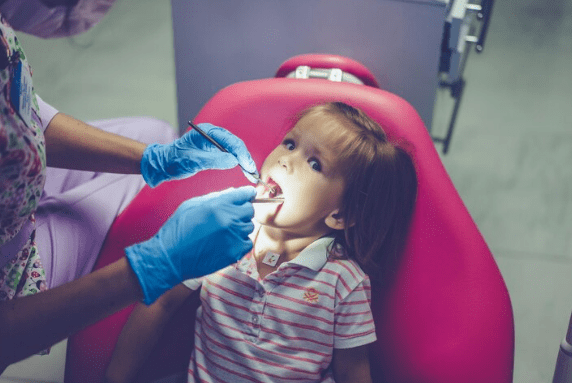
You are probably budgeting for your child’s future college tuition, but completely ignoring the predictable medical bill growing inside their mouth. Most parents view the dentist as a repair shop, only booking an appointment when a tooth visibly rots or a child wakes up crying. This reactive approach guarantees two things: unnecessary physical pain for your child and a massive financial hit to your wallet. You cannot drill your way out of a disease that requires behavioral management. This is where preventive dentistry changes the equation.
The Disposable Tooth Delusion
Let us address the most persistent misconception in pediatric health. You look at your toddler’s primary teeth and assume they do not require serious maintenance because the Tooth Fairy will eventually take them away. That assumption ignores basic human anatomy.
Primary teeth are the architectural foundation for your child’s jaw. They guide the permanent adult teeth into exact alignment and dictate the physical development of the lower facial structure. When decay destroys a baby tooth prematurely, the surrounding teeth naturally collapse into the empty space. You are effectively engineering a future orthodontic crisis because the adult teeth will erupt crooked, crowded, or entirely out of position.
True preventive dentistry stops this structural collapse before it ever begins. Instead of waiting for a cavity to hollow out a molar, a specialist monitors the enamel density from the exact moment the tooth erupts.
Treating baby teeth as disposable placeholders ensures your child will spend their teenage years in expensive metal brackets.
The damage always costs significantly more to fix than it does to prevent.
The Math of True Prevention
Drilling and filling is not healthcare. It is damage control. If your child requires a composite filling, the bacterial infection has already won the first round.
Dental care is really important to prevent problems. Preventive dental care helps change the environment in our mouths so we do not get cavities. It uses fluoride varnishes that make the weak spots in our teeth strong. Dental care also uses sealants that block the holes in our molars where food can get stuck. These are things to do and they do not hurt. They take a few minutes to put on and they help keep our teeth strong, for a long time.
Consider the practical difference between waiting for a clinical problem and actively preventing one from developing.
| Approach | Clinical Action | Patient Experience |
| Reactive Care | Deep fillings, root canals, extractions | High anxiety, local anesthesia, lingering pain |
| Preventive Care | Fluoride varnish, sealants, risk assessment | Painless, fast, builds trust with the provider |
Accessing proper preventive dental services early reduces a child’s lifetime dental costs by thousands of dollars. When you invest in preventive dentistry, you bypass the surgical chair entirely. You protect the physical tooth structure while eliminating the need for invasive local anesthesia.
The most advanced dental drill in the world is still a clinical failure of prevention.
You are actively choosing between a five-minute varnish today or an hour of surgical extraction next year.
The Twelve-Month Mandate
Parents often think about why they need to take their one-year- child to see a dentist when the child does not even have any teeth yet. The reason for this is really simple. When we see the one-year- child we are not just looking at the childs teeth. We are also looking at the parents of the one-year- child.
This first visit, to the dentist is a time to teach the parents of the one-year-old child how to take good care of the one-year-old childs teeth. It helps the parents of the one-year- child learn what they need to do to keep the one-year-old childs teeth really healthy.
Consider a couple who brought their 18-month-old daughter into the clinic last month. They were extremely diligent, brushing her teeth twice a day with an expensive sonic toothbrush, but she already had severe demineralization along her upper gums. They were letting her walk around with a sippy cup of diluted organic apple juice all afternoon, mistakenly thinking the dilution made it safe. It took a ten-minute consultation to identify this specific habit and apply a remineralizing agent, completely reversing the physical damage without a single tear.
This exact scenario is the core of preventive dentistry. It identifies the blind spots in your daily routine before they cause permanent structural failure. We assess the child’s airway, check for restrictive tongue ties, and evaluate their specific saliva flow volume.
A dental visit at age one is a strategic planning session, not a surgical intervention.
Waiting until age three or four guarantees the specialist will be fixing mistakes rather than preventing them.
Diet, Saliva, and the Invisible Acid War
You already know that candy is bad for your teeth. Can cause cavities.. What you might not think about is that organic gummy vitamins and eating dry crackers all the time can hurt your childs mouth even more. The organic gummy vitamins and the dry crackers are doing a lot of damage, to your childs teeth. Your childs mouth is getting hurt by the gummy vitamins and the dry crackers.
Every time your child eats a carbohydrate, the bacteria in their mouth immediately produce acid. This aggressive acid attack lasts for about twenty minutes. If your child snacks continuously, their mouth remains in a permanent state of high acidity. Their saliva never gets the required downtime to wash away the acid and repair the microscopic damage to the enamel.
Effective preventive dentistry is about controlling the acid cycle in our mouths. It’s not about giving up snacks it’s about eating them at the right times. For example having a piece of chocolate after lunch is not as bad as slowly drinking a fruit smoothie over three hours. This way we can enjoy our snacks while keeping our teeth safe from damage. Managing acid production is key to preventing tooth problems. So it’s really about being smart, about when and how we eat our snacks. The goal is to minimize the time our teeth are exposed to acid. By doing we can help keep our teeth strong and healthy.
Utilizing comprehensive preventive dental services allows a specialist to analyze your specific dietary patterns. We look closely at the hidden starches in your pantry that adhere to teeth like glue and feed the bacterial colonies.
Frequency of eating destroys enamel much faster than the total volume of sugar consumed.
You cannot out-brush a highly acidic dietary schedule.
Building Psychological Immunity
The greatest long-term benefit of early dental visits has nothing to do with teeth. It is entirely psychological. Dental anxiety is a learned behavior, usually stemming from a highly traumatic first experience where a child was already in acute physical pain.
If a child’s first introduction to a clinical chair involves needles, loud drills, and strangers holding them down, they will actively avoid healthcare for the rest of their adult life. Preventive dental care completely flips this narrative. When a child visits the clinic every six months purely for a quick exam, a fun toothbrush, and a painless varnish, they build an impenetrable psychological immunity to dental fear.
They learn the environment is physically safe and predictable. Finding the Best Pediatric Dental Clinic for Kids guarantees the staff knows exactly how to handle a toddler’s unique sensory needs. The overhead lighting, the clinical pacing, and the chosen vocabulary are explicitly designed to remove fear from the equation.
Parents searching for the Best Pediatric Dentistry in India must look beyond clinical credentials and closely evaluate the clinic’s behavioral management philosophy. A practitioner focused on true preventive dentistry will spend as much time managing the child’s psychology as they do examining their molars.
Familiarity breeds comfort, while sudden emergency visits breed lifelong medical phobias.
A child who implicitly trusts their dentist will never hide a throbbing toothache from their parents.
Frequently Asked Questions
Do dental sealants contain harmful chemicals?
Dental sealants are really safe. They do not have any bad stuff in them. They put a thin layer of special resin in the deep holes of the back teeth to keep food and bad bacteria out. You do not have to worry about the resin because you’re only around it for a very short time. This is nothing compared to the problems you can have if you get a bad cavity in your back teeth. Dental sealants can help prevent this. They keep your teeth safe, from bacteria and food that can cause problems. Dental sealants are a way to keep your back teeth healthy.
At what age should I stop brushing my child’s teeth for them?
You should. Help your child brush their teeth until they can tie their shoelaces by themselves. This usually happens when they are seven or eight years old. Before that kids do not have the skills to reach the teeth and clean the gums properly. They might miss a lot of plaque. You need to help them brush until they are good enough to do it on their own. The brushing help is important because young children do not have the hand skills to do a job. They need your help to clean their teeth well. You should help them until they can do it securely. Tying shoelaces is a sign that they can brush by themselves. So you should keep helping them brush their teeth until they reach that point.
Is fluoride toothpaste safe for a toddler who cannot spit it out?
Yes, provided you strictly use the correct clinical dosage. For a child under three, you use a tiny smear of fluoride toothpaste no larger than a grain of rice. Even if they swallow this entire amount, it is perfectly safe and provides a critical topical defense against decay. You upgrade to a pea-sized amount only when the child demonstrates the physical ability to spit consistently.
Will thumb sucking ruin my child’s jaw development?
The physical habit is a deal because of how strong it is and how long it lasts. Most kids stop doing it on their own by the time they’re three years old and it does not hurt their jaw.. If the habit keeps going really strong after they are four years old it can really change the shape of the upper part of their mouth and make their front teeth stick out which means they will need to get a lot of work done by an orthodontist when they are older.
Preventive dentistry is not about avoiding small cavities. It is about making sure your childs overall physical development is okay in the run. If a child has dentistry issues like chronic and grade dental pain they will have a tough time sleeping. They will also have a time paying attention in school and eating the food they need to grow strong. Preventive dentistry is important for kids because it helps them chew the food that has proteins. Proteins are necessary for their bones to grow. Preventive dentistry is important, for kids because it helps them stay healthy and have preventive dentistry. Your child needs dentistry to grow up healthy and strong. Preventive dentistry helps kids eat the food they need to grow up and have good preventive dentistry.
You can really help your child avoid a disease that’s almost completely preventable. Think about this in a way. Of fixing problems that have already happened focus on keeping your childs teeth strong and healthy right from the beginning. This means you need to take care of your childs teeth from the first day. You have the power to protect your childs teeth. Protecting the enamel of your childs teeth is a part of this. So you should take action every day to defend the enamel of your childs teeth. You can do this by being proactive about taking care of your childs teeth. Your childs teeth need your care and attention to stay strong and healthy. Take care of your childs teeth. They will be healthy, for a long time.