
We Little Pediatric Dental Clinic Caring for Little Smiles
Walk into We Little and you’ll notice something pretty quickly — it doesn’t feel like a dental clinic. That’s deliberate. Families from Chennai, Coimbatore, Bangalore, and Hyderabad have been bringing their children here not just for cleanings or cavity fixes, but because something broader was going on and they needed someone who’d actually look at the full picture. How their child breathes. Whether they’re sleeping through the night. How their jaw is developing. These things matter here. If you’ve been looking for a good kids dentist nearby and want more than a quick check and a sticker, you’re in the right place.
The Problem Most Parents Don’t See Coming
Almost every family we meet booked their first appointment because something hurt. A cavity announced itself. A tooth chipped. Their child started grinding at night and nobody was sleeping. That’s the norm, and to be honest, it makes perfect sense: you take care of what’s in front of you.
However, this is what we observe on our end, day after day: the real issue has been operating covertly for months before the symptom appears. Sometimes years. Mouth breathing that started in infancy. A tongue that never learned to rest in the right position. Sleep that looks fine on the surface but isn’t restful at all. Sugar habits that set in at two years old. None of these things wave a flag. They just steadily do their work — reshaping a child’s jaw, narrowing the airway, setting up the teeth for crowding — until finally something visible appears and the appointment gets booked.
Standard dental care, for the most part, treats the thing that showed up. Fill the cavity. Extract the tooth. Done. What caused it? That question usually doesn’t get asked. We built We Little around that question.
What the Numbers Tell Us
Here’s something that doesn’t come up nearly enough in public conversation: over 60% of Indian children between 5 and 12 are dealing with some form of dental decay. More than half. And that’s just cavities. Separately, close to 1 in 3 children are already showing early signs of sleep-disordered breathing — a problem rooted in how the jaw grows and how oral muscles develop, and one that almost nobody catches early because it doesn’t look like a dental issue.
Crowded teeth run in families, parents are told. Cavities are just bad luck, or bad genes. And sometimes that’s partly true. But the research has been pointing in a different direction for years now. The habits a child develops around breathing, swallowing, chewing, and sleeping have an enormous influence on how their mouth and face develop. These are habits that can be identified. They can be changed. And when they’re addressed early enough, the outcomes are genuinely different — fewer extractions, less orthodontic intervention, better sleep, better concentration, healthier development across the board.
The mouth isn’t a separate system. What happens there touches everything else.
Our Specialized Services
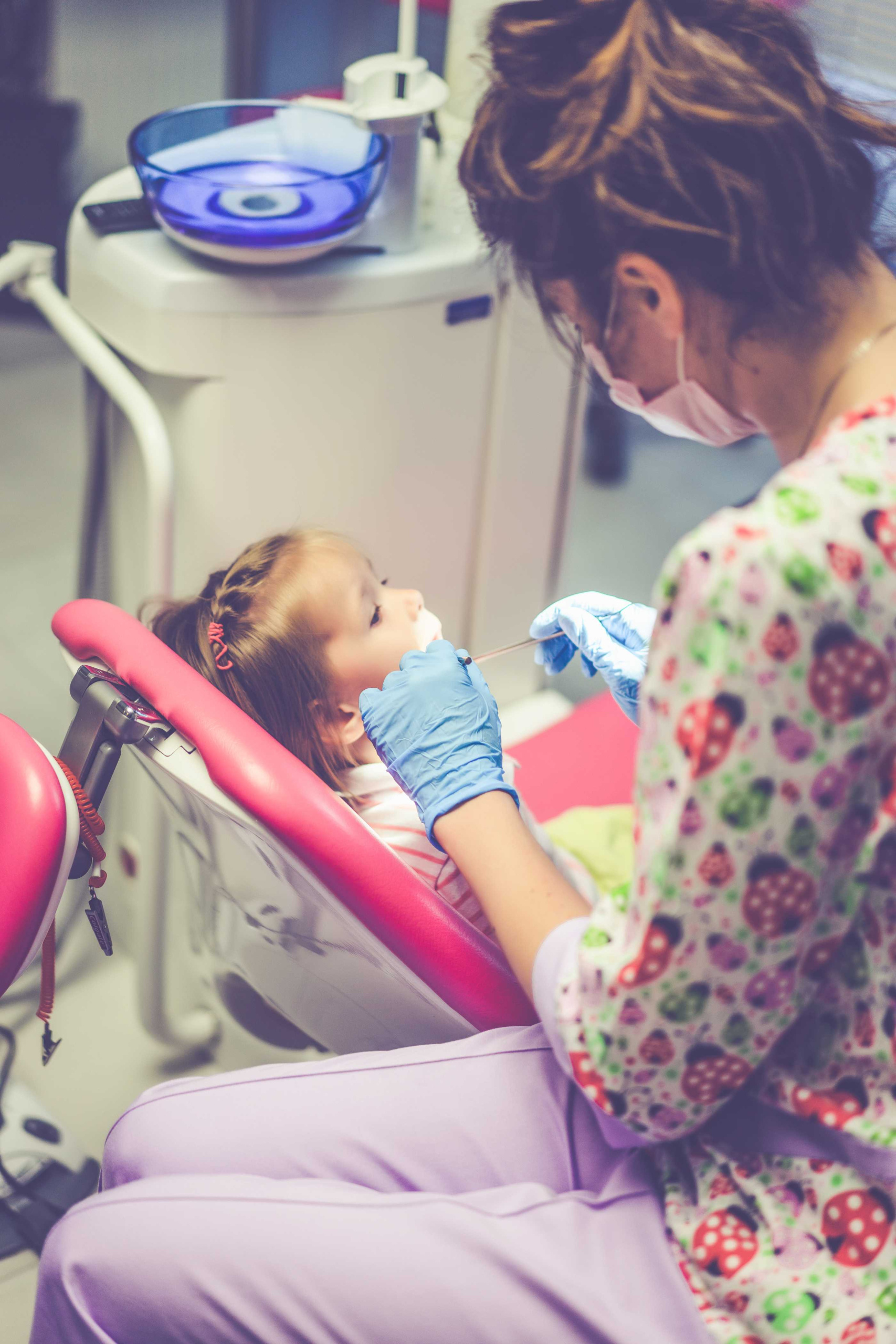
Children who are scared of dentists usually got that way because of one bad experience. It doesn’t take much. A moment of pain, a feeling of not being in control, an environment that felt cold or rushed — and suddenly every future appointment is a battle before it even starts. We think about this constantly. Every procedure here is designed from the ground up to be as calm and comfortable as possible. Child-friendly techniques, proper gentle numbing, no rushing, no talking down to kids like they don’t understand what’s happening. Routine visits and more involved treatments both get the same unhurried care. Children leave without dread, and over time, that changes their whole relationship with dental health.
When breastfeeding isn’t going well, most parents first learn about tongue tie from a lactation consultant. Others don’t learn about it until years later, when a speech therapist points out something that has been subtly influencing development all along. In between, there are innumerable kids whose jaw, speech, and eating patterns are being influenced by an illness that no one has yet to diagnose. We assess every child carefully — no assumptions, no unnecessary procedures. When a release is needed, it’s done gently and with full attention to how the child is feeling throughout. We see newborns, toddlers, school-age kids, and teenagers here, because tongue tie doesn’t stop being relevant just because a child gets older. Catch it early and the correction is simpler. Catch it later and it still makes a meaningful difference.
This one tends to surprise parents the most. Most people assume that if their child has crowded or crooked teeth, braces are simply the next step — it’s just a matter of when. But teeth don’t become crowded randomly. They crowd because of pressure: the wrong breathing patterns, a tongue that rests too low, a swallowing pattern that pushes against developing teeth day after day, thousands of times. Change those patterns, and you change the environment the teeth are growing in. Myoline therapy uses guided exercises and the Myoline appliance system to retrain those habits and support the jaw in developing the way it’s supposed to. For a lot of children who start this early enough, it reduces or eliminates the orthodontic intervention that would otherwise have been unavoidable.
Snoring in a small child sounds harmless. Lots of parents mention it almost fondly. But snoring means the airway is partially obstructed, and a child whose airway is obstructed night after night isn’t getting the kind of sleep that supports proper growth and development. Pediatric sleep apnea, habitual mouth breathing, and other forms of sleep-disordered breathing in children are directly tied to how the oral structures — jaw, tongue, soft tissue — are developing. We’re trained to look for these signs and to work with families on real solutions, not just sleep hygiene tips. When a child starts breathing properly through the night, the changes show up in every part of their life — growth, focus, mood, behavior. Sleep is not separate from oral health. In children especially, the two are deeply connected.
Prevention isn’t a concept here — it’s the actual reason we do things the way we do. Fluoride treatments, dental sealants, dietary counseling, habit guidance — these are the tools, but the goal is bigger than any single treatment. We want children to reach adulthood with healthy teeth because they understand from early on why that matters and what it takes, not because they were dragged to appointments and told what to do. Parents who bring their children consistently tell us the same thing: at some point their child started actually caring about their teeth. Not just tolerating the brushing, but understanding it. That shift is what preventive care done properly looks like. It’s proactive, it’s ongoing, and it’s focused on building habits that last a lifetime rather than fixing damage after the fact.
Good prevention reduces the need for restorative work — but it doesn’t eliminate it entirely. Cavities happen. Accidents happen. When they do, we handle fillings, crowns, pulp therapy, and other restorative treatments with exactly the same child-first approach that runs through everything we do. Behavior guidance and a calm, unhurried environment are built into every procedure. We use techniques that help children feel informed and in control, which makes a real difference in how the experience goes — for the child, and for the parents sitting in the waiting room. Children who have had bad experiences at other practices often do significantly better here. The goal is always the same: restore the tooth and keep the child’s trust intact. Both matter.
Why We Do Things Differently
Dr. Shifa Shamsudeen opened We Little in 2013. Her training covers pediatric dentistry, myofunctional therapy, tongue tie management, and sleep medicine — not a combination you come across often, and that’s exactly the point. She designed this practice around a question most dental clinics never ask: not “what’s wrong with this child’s teeth?” but “why does this keep happening, and what do we need to actually change?”
In the early years, the results started showing up in ways that were hard to ignore. Families who had come in every year with new cavities stopped getting them. Kids who would have needed teeth pulled didn’t need to. Parents would mention almost as an aside that their child was sleeping better, that their speech had cleared up, that their teacher had commented on their focus improving. These weren’t outcomes anyone had promised — they were just what happened when the root cause got addressed instead of papered over.
We Little grew because of those results. One clinic became four cities. Thousands of families, now, who trust us not just to treat their children but to actually understand them.
The We Little Method
Before any treatment starts, every child goes through a proper evaluation. Not a standard check-up. An actual diagnostic procedure that charts the relationship between your child’s oral habits and their growth, sleep patterns, breathing patterns, and the likely future course of events if nothing changes. Next, we come up with a strategy that works for that particular child.
It moves through four stages:
Assess — teeth, jaw structure, posture of the tongue, breathing, sleep, and food habits. the entire image, not just what is immediately apparent. Before taking any action, we want to comprehend the situation.
Identify — What’s actually behind what we’re seeing? Is mouth breathing the reason the teeth are crowding? Has a tongue tie been affecting feeding since this child was weeks old? Is the airway narrowing enough at night to explain the restless sleep and morning grumpiness? This stage is about tracing problems to their source.
Intervene Early — Myoline therapy, tongue tie release, breath retraining, targeted preventive treatments. The goal is to catch things while correction is still relatively straightforward — well before they reach the point of needing surgery, years of braces, or extractions that could have been avoided.
Educate and Support — Every parent leaves with genuine, usable guidance — not a leaflet, but a real conversation about what to watch for and what to do at home. The work that happens between appointments is just as important as what happens in the chair, and we make sure families are equipped for it.
This is the difference between children’s dental care at We Little and what you’d find at a standard clinic.
Who Needs We Little’s Care
The honest answer is: you don’t need to wait for something to go wrong before you come in.
Come see us if your child is an infant or toddler with feeding difficulties or a suspected tongue tie. Come if you have a child between 3 and 8 who’s already showing early crowding or teeth that don’t seem to be coming in quite right. Come if your school-age child snores, breathes through their mouth, or wakes up regularly in the night. Come if you’ve been doing everything right — brushing, flossing, watching the sugar — and the cavities keep happening anyway. Come if your child had one bad dental experience and now won’t go near a clinic. Come if your child has simply never had a thorough evaluation and you want to know where things actually stand.
No referral needed. No dramatic symptom required. If something has felt off, or if you’ve just been putting this off because you weren’t sure it was worth it — it’s worth it. Parents who search for a kids dentist nearby and end up at We Little almost always tell us the same thing: they wish they’d come sooner. Families looking for the best pediatric dentistry in India will find that We Little offers a depth of care that’s genuinely uncommon.
Why Families Choose We Little
There’s no single answer to this, but if you ask parents who’ve been coming for years, most of them say some version of the same thing: they felt like their child was actually seen here. Not processed. Not rushed. Seen. Their concerns were taken seriously. The doctor remembered their child’s history. Someone asked follow-up questions that showed they’d been paying attention.
Our doctors are trained not just in dentistry but in child behavior, growth and development, sleep medicine, and myofunctional therapy. That combination is rare, and it shows in how appointments actually go. Our team also continuously trains through WICE — the We Institute of Continuing Dental Education — so the care here reflects what the current evidence actually supports, not decade-old defaults.
Warmth and expertise together. That’s what keeps families coming back.
Let’s Talk About Your Child
Each child is unique. Talking openly about your child’s dental history, daily routine, concerns, and observations is always the best first step. From there, we can create a clear picture and determine what makes the most sense for your child in particular.
First visits are assessments, not procedures. No pressure, no surprises on day one. Just a thorough look, honest answers, and a plan that fits your child — not a template.
Find us at whichever branch is closest to you:
Chennai — 9751558000 Coimbatore — 9786929892 Bangalore — 08041151111 Hyderabad — 04049519459