
Let’s Be Honest About How These Are Usually Found
A dentist spots something on an X-ray. The parent in the chair had no idea. Nine times out of ten, that’s how early cavities in kids get discovered — not because the child complained, not because anyone noticed anything wrong, but because the decay had been quietly going about its business for months before anyone was looking in the right place.
There’s no dramatic sign. No pain in the early stages, no obvious visual clue. Early tooth decay just gets on with it. And the thing is — caught at that early stage, it can often be reversed without a single drill. Left alone until it becomes obvious, it can’t. That gap between ‘reversible’ and ‘now you need a filling’ is exactly where early detection earns its worth.
What’s Actually Going On Inside the Tooth
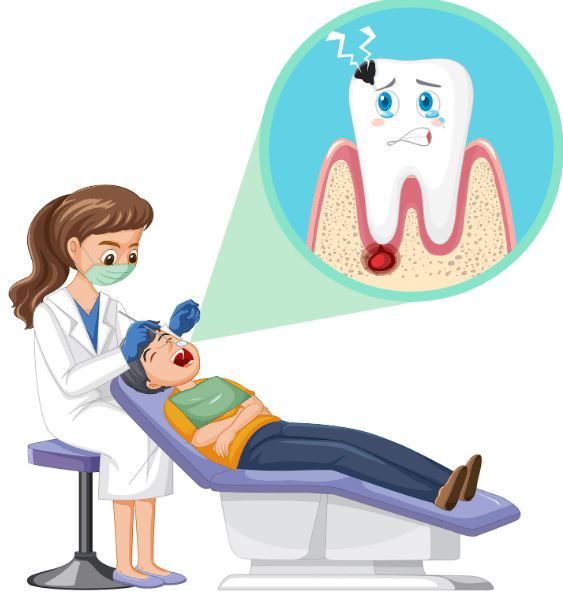
The first stage of early cavities — technically called early childhood caries in children under six — isn’t a hole. It’s a chalky white patch on the enamel surface. Still fixable at this point, genuinely. Fluoride, some dietary changes, a bit of time. But it’s easy to miss because it doesn’t hurt and it doesn’t look dramatic, and most parents aren’t in the habit of examining their child’s teeth under good light. Which is fair enough — why would you be?
By the time there’s a brown spot, a sensitivity to cold, a visible discolouration along the gumline — that’s past the reversible stage and into ‘this needs treatment’ territory. The distance between those two points is where the whole argument for regular check-ups lives.
Why Early Cavities Keep Happening — The Actual Causes
Bacteria feed on sugar, produce acid, acid eats through enamel. That’s the mechanism. But the specific habits that keep that cycle running constantly in young children are worth knowing individually — because each one has a clear fix, and most parents aren’t aware of all of them.
It’s how often, not how much
Every time sugar hits the mouth — including the sugar in crackers, fruit pouches, flavoured milk, not just sweets — bacteria trigger an acid attack that runs for about 20 minutes. A child who grazes all afternoon is essentially running those attacks back to back. One glass of juice at lunch is one attack. Same total sugar, completely different outcome for the teeth. This is why the snacking pattern matters more than the snack itself.
The bedtime bottle — and I can’t stress this one enough
Some of the worst early tooth decay I see comes straight from this. Milk, including breast milk, contains lactose. When a child falls asleep mid-feed, saliva production drops to almost nothing — there’s nothing washing the milk away. It just sits against the upper front teeth for hours. The decay pattern that results is almost diagnostic: it follows the upper front gumline like a line drawn there. It moves fast, and in young children it often ends up requiring treatment under general anaesthesia. Which is — understandably — every parent’s nightmare. The fix is straightforward: stop the bedtime bottle before twelve months. If a drink at bedtime genuinely can’t be avoided, make it water.
Dry mouth — the hidden one
Saliva is doing a lot of quiet work that nobody appreciates until it’s gone. It remineralises enamel, neutralises acid after meals, washes debris away. Children who breathe through their mouths have dry oral environments — especially overnight. Same with children on antihistamines or certain asthma inhalers. If your child has unexpectedly high cavity counts despite what you’d describe as good oral hygiene, dry mouth is the first thing I’d want to rule out. It’s often the piece that explains everything.
Bacteria from you
Children aren’t born with Streptococcus mutans — the primary cavity-causing bacteria. They catch it from caregivers, usually in the first couple of years of life, through shared spoons, tasted food, kisses. The younger the child is when this happens, the higher their cavity risk tends to run long-term. A parent with active, untreated decay is a meaningfully higher transmission risk. This is not blame — it’s just something worth knowing, because it has a simple fix.
Brushing that doesn’t count
Two minutes, twice a day, with fluoride toothpaste. Timed — not guessed. Left to their own devices, most children brush for thirty seconds and miss the back teeth entirely. The evening brush matters the most, by a long way. Saliva dries up during sleep, so whatever’s left on the teeth sits there undisturbed for eight hours. Skipping the bedtime brush is, in my experience, the single most reliable way to end up with early cavities in kids.
Signs That Are Worth Looking For
On their own, each of these has an innocent explanation. More than one together — get it checked:
- White or chalky spots on the tooth surface. Earliest sign. Completely reversible at this stage, but easy to overlook.
- Brown discolouration along the gumline of the upper front teeth.
- A tooth that looks duller, yellower, or slightly rougher than the ones beside it.
- Sensitivity to cold or sweet that the child can specifically point to.
- A visible pit or dark spot in a back molar.
- Your child favouring one side when chewing, or avoiding foods they used to eat without issue.
Pain is a late sign — by the time there’s a spontaneous ache, not just a wince at cold, the early childhood caries has very likely reached the dentine or the nerve. You want to be at the dentist well before that. Which is the whole point of starting check-ups at the first birthday, not ‘when they’re a bit older.’
Treatment — and Why Timing Changes Everything
What early childhood caries treatment looks like depends entirely on how early the problem is found. That’s not a platitude — it genuinely determines whether the appointment takes two minutes or two hours.
Fluoride varnish: If the early childhood caries haven’t broken through the enamel yet, professional fluoride varnish can actually reverse the process. No drilling. No filling. Two minutes in the chair and the child is back in the waiting room. This only works at the white-spot stage — which is the entire argument for catching it there.
Fissure sealants: The deep grooves on back teeth trap food and bacteria and account for the majority of childhood cavities. A sealant is a protective coating painted over those grooves before decay starts. Simple, quick, lasts years. Ask about it proactively when the first permanent molars come in around age six — don’t wait to be told after the fact.
Fillings: Once enamel has broken down, the decayed area is removed and filled. Routine in a cooperative child. In very young children with significant decay, sedation or general anaesthesia is sometimes necessary — which is precisely the outcome that earlier early childhood caries treatment would have avoided.
Silver Diamine Fluoride (SDF): A topical silver-fluoride solution that arrests active decay without drilling. The tradeoff: it stains the treated area black. Used increasingly in young children where conventional treatment isn’t practical or accessible.
Baby teeth are worth treating — this comes up constantly and the answer is always yes. They hold space for the permanent teeth developing beneath them. Lose one prematurely and the surrounding teeth drift. The permanent tooth erupts into a gap that’s closed over, comes in crooked, and you’re looking at orthodontic work that costs a multiple of the filling that would have prevented the whole situation.
Prevention — What I’d Actually Tell You to Do
Start brushing at the first tooth
Not when there are several teeth. The first one. A smear of fluoride toothpaste on a soft brush, morning and night. At age three, a pea-sized amount. Fluoride toothpaste is the most evidence-backed preventive tool in paediatric dentistry — full stop. The concern about swallowing does more harm than the small amount swallowed ever would.
It’s the pattern, not the amount
Sugar at mealtimes is manageable. The same sugar trickling in throughout the afternoon, in biscuits and juice and fruit pouches, keeps the acid cycle running almost continuously. Set snack times. Replace between-meal juice with water. This makes more difference to cavity risk than eliminating sugar entirely — which nobody manages anyway.
Sealants at six
First permanent molars arrive around age six with grooves that are practically designed to trap decay. They need to last a lifetime. Seal them when they come in, before anything starts. Ask about this proactively — don’t wait for the dentist to point at a cavity in a tooth that could have been sealed two years ago.
Check-ups from year one
Six-monthly from the first birthday. Partly to catch early cavities before they become bigger ones, obviously. But also because a child who’s been coming to the dentist since they were one is not afraid of it. A seven-year-old’s first visit, prompted by pain, is a different experience entirely — for the child, for the parent, and frankly for the dentist.
Finding the Right Dentist for This in India
If you’re looking for the Best Pediatric Dental Clinic for Kids in India or the Best Pediatric Dentistry in India specifically for early cavity management — look for an MDS-qualified paedodontist. Not a general dentist who sees a lot of children; a specialist. The difference is real. A good paediatric practice applies fluoride varnish at routine check-ups without you having to ask, brings up sealants when the first molars arrive, takes bitewing X-rays at the right intervals to catch decay between teeth before it’s visible, and has a setup where young children aren’t frightened. At the first appointment, ask what their prevention philosophy looks like. If the answer focuses mostly on what happens after a cavity forms, rather than how they prevent one — keep looking.
Questions I Get Asked a Lot
How early can this actually start?
From the first tooth — usually around six months. Early childhood caries can progress very quickly in infants and toddlers. First dental visit at age one, or when the first tooth appears, whichever is earlier. Not ‘when they’re older and can sit still.’
Can early tooth decay actually reverse itself?
At the white spot stage, genuinely yes. Fluoride and the right dietary changes can remineralise the enamel and stop it in its tracks. Once the surface breaks down, it can’t repair itself — that needs a dentist. The window for reversal is narrow and easy to miss, which is the whole point of catching it early.
My child brushes every day. How are they still getting cavities?
Technique and timing matter more than frequency. Thirty seconds of inattentive brushing misses most of what matters. And if your child breathes through their mouth, the chronic dryness that creates accelerates early cavities regardless of how carefully they brush. Dry mouth is the hidden factor in a lot of cases where good hygiene isn’t adding up to good results.
Are baby teeth really worth treating? They fall out anyway.
Yes. Firmly, yes. Baby teeth hold the space that permanent teeth are growing into. Lose one early and the gap closes — surrounding teeth drift in. The permanent tooth has nowhere to go and erupts crooked. The orthodontic work to sort that out costs far more, in time and money, than the filling that would have kept the baby tooth in place. ‘They fall out anyway’ is probably the most expensive assumption in paediatric dentistry.
Is it basically just about diet?
Diet is the biggest driver — but the picture is wider than that. Bacterial transmission from parents in early infancy, salivary flow, fluoride, brushing quality, and check-up frequency all contribute. A child with a genuinely excellent diet who never brushes at night can still develop cavities. The combination of factors is what determines actual risk, not any one thing alone.
