
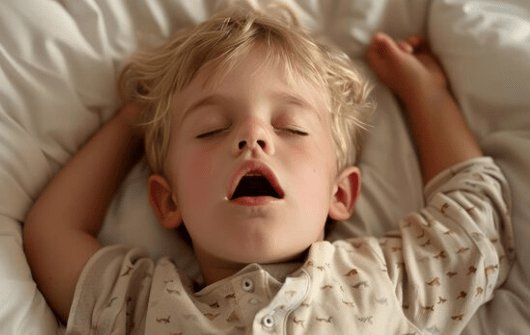
Most parents worry about sugar and cavities.. Very few parents think to check if their child is breathing correctly and that can really change the shape of their childs face.
Mouth breathing in children is a deal. It is something that affects their body and can change their face over time. If a child breathes through their mouth it can cause problems that show up on. By the time a dentist sees a problem with the childs teeth or jaw on an X-ray it might be too late to fix it
Here is what is happening with mouth breathing in children why it is important and what parents can do about mouth breathing before the problems, with mouth breathing become permanent.
The Nose Is Not Optional
Your childs nose is meant to clean, warm up and control the air they breathe. It makes a special gas called oxide. This gas helps open up the airways and keeps blood pressure normal. When a child breathes through their mouth none of these things happen. The air goes in dry and dirty straight to the throat.
When we breathe through our mouth it affects the way our tongue rests. The tongue usually rests against the roof of our mouth. This helps our upper jaw grow wider when we are kids.. When our mouth is open all the time the tongue goes down to the bottom of our mouth. The pressure on the roof of our mouth is gone. So the palate does not get the message to get wider. Instead it gets narrower. Mouth breathing is really bad for the palate. The palate needs the tongue to push against it so it can grow properly. Mouth breathing changes the way our tongue and palate work together. The tongue and the palate are very important for our mouth. Mouth breathing can cause problems, for the tongue and the palate.
A narrow palate is not just a cosmetic issue. It means a smaller space for teeth to erupt, and a smaller space for the airway behind it.
The nasal passage and the dental arch are not separate systems. They grow together — or they don’t.
What Causes Mouth Breathing in Children
The mouth breathing causes are worth knowing because most of them are treatable — if caught early. The most common are:
- Chronically blocked nasal passages from allergies or repeated colds
- Enlarged adenoids or tonsils that obstruct nasal airflow
- Deviated septum or nasal structural issues
- Habitual breathing patterns that persist even after the original blockage clears
- Obstructive sleep apnea — where the airway collapses during sleep
Allergies are probably the most underestimated driver here. A child who has had a stuffy nose since age two has spent years breathing through their mouth. At some point it stops being a symptom and becomes the default.
Fix the cause, and you still have to fix the habit. They are two separate problems.
What It Looks Like on the Face
There is a recognisable pattern called “adenoid face” — and once you know it, you start seeing it everywhere. It involves a long, narrow face, an open mouth posture, a slightly receding lower jaw, and dark circles under the eyes from disrupted sleep.
This is not genetic destiny. It is the result of years of altered muscle forces on a growing skull. Bones in children are remarkably plastic — they respond to the forces placed on them. Mouth breathing changes those forces in a consistent, predictable direction.
The upper jaw narrows. The lower jaw drops back. The teeth, now competing for inadequate space, crowd and overlap. The bite deepens or shifts. All of this creates orthodontic problems that will likely need correction — braces, expanders, possibly jaw surgery in severe cases.
The teeth are a visible record of how a child has been breathing. Crowding, crossbites, and overbites are symptoms, not just dental bad luck.
A 9-year-old named Arjun came in for a routine check at a clinic in the city. His mother mentioned he snored. The examining dentist noticed immediately: narrow upper arch, high palate, mild Class II bite relationship, mouth always slightly open. When asked directly, the mother confirmed he had been a mouth breather since he was a toddler, following a prolonged period of allergies. Nobody had connected the two things before. He was referred to an ENT, started palatal expansion, and began myofunctional therapy. Two years later, his facial growth was tracking normally. The timing mattered.
Catch it at nine and you have options. Catch it at nineteen and you are correcting what could have been prevented.
Mouth Breathing Symptoms: What to Actually Watch For
The mouth breathing symptoms are not always obvious from across the room. Some are visible. Others show up in behaviour and performance.
On the physical side:
- Mouth open at rest — especially when your child is concentrating or sleeping
- Snoring or noisy breathing during sleep
- Dry, cracked lips
- Dark circles under the eyes without obvious cause
- Frequent sore throats or dry mouth in the morning
On the behavioural side, mouth breathing during sleep is linked to poor sleep quality — which shows up as difficulty concentrating, irritability, and in some studies, symptoms that overlap significantly with ADHD. A child who is being assessed for attention difficulties is worth having reviewed for airway issues first.
Poor sleep is not just tiredness. In a growing child, disrupted sleep affects growth hormone release, mood regulation, and learning consolidation.
If your child is tired despite getting enough hours in bed, the question is not how long they are sleeping — it is how well.
What the Dental Chair Can Tell You
A good paediatric dentist will notice mouth breathing signs before most parents do. The clinical picture is fairly consistent: high, narrow palate; dental crowding in the upper arch; a bite that doesn’t close well; sometimes a forward head posture during the examination.
Some families seek guidance from a Pediatric Sleep Guide & Solutions specialist when the breathing issues extend into sleep-disordered breathing. That is worth pursuing if snoring, witnessed apneas, or significant daytime fatigue are present.
At the Best Pediatric Dental Clinic level, myofunctional therapy is increasingly offered alongside orthodontic treatment — training the tongue and lip muscles to support nasal breathing and correct resting posture. It is not a quick fix, but it addresses cause rather than just consequence.
| Intervention | Best Age Window | What It Addresses |
| Palatal expansion | 6–11 years | Narrows arch width; creates room for teeth and airway |
| ENT evaluation | Any age | Adenoid/tonsil obstruction, septal issues |
| Allergy management | Any age | Removes the trigger keeping the nose blocked |
| Myofunctional therapy | 5+ years | Retrains tongue posture and lip seal |
| Orthodontic treatment | 9–14 years typically | Corrects dental crowding and bite issues |
The interventions exist. The question is whether you act while the bones are still growing.
What You Can Do Right Now
Start by observing your child while they sleep. Is their mouth open? Do they snore? Do they wake up tired? These are not trivial observations — they are clinical data.
If mouth breathing is present, a paediatric dentist or ENT is the right first call. Not to panic, but to assess. An X-ray of the upper jaw takes seconds and tells a detailed story about arch development. An adenoid assessment is straightforward.
Mouth breathing at age five is a habit worth correcting. Mouth breathing at age twelve is starting to leave a structural record. By adulthood, correcting the downstream effects takes significantly more time, cost, and intervention than addressing the pattern early would have.
That is the point. Not to alarm you — to orient you toward acting while there is still significant room to act.
The face is still forming. That is a problem and an opportunity at the same time.
You will not regret asking the question early. You might regret waiting to ask it.
Frequently Asked Questions
My child only breathes through their mouth sometimes. Is that actually a problem?
Sometimes we breathe through our mouth when we have a cold or when we are exercising hard. This is okay. What is not okay is when we always breathe through our mouth. I mean when our mouth is open all the time even when we are sleeping or just sitting around doing nothing. If this is always happening we should pay attention to it. It is a problem even if it does not seem like a deal. Mouth breathing is the thing that we need to think about. Mouth breathing is what is important here.
Can the facial changes from mouth breathing be reversed?
When we talk about kids whose bones are still growing the answer is yes it really does make a difference. Things like widening the palate, myofunctional therapy and fixing the problem can actually change how the bones grow. But with adults the bones have already stopped growing so they usually need to get braces or even have surgery on their jaw. It is really worth trying to fix these problems on especially with children whose bones are still growing because it can make a big difference in the long run with things, like palatal expansion and myofunctional therapy.
My child had their adenoids removed and they are still mouth breathing. Why?
Because by the time the adenoids are addressed, mouth breathing has often become a learned habit — not just a mechanical obstruction. The pattern persists even after the blockage is gone. This is why myofunctional therapy is frequently recommended alongside or after surgical intervention, not instead of it.
At what age should I raise this with a dentist?
The moment you notice it — there is no minimum age for concern. Dentists can assess palatal development from around age four onwards. The earlier a pattern is identified, the more options are on the table before the growth window closes.
Could my child’s attention or behaviour problems be related to mouth breathing?
Possibly. Sleep-disordered breathing — of which habitual mouth breathing is often a component — produces poor sleep quality. Poor sleep in children is consistently linked to attention difficulties, emotional dysregulation, and academic underperformance. It is not always the cause, but it is worth ruling out before other explanations are pursued.
Mouth breathing is not a personality trait. It is a pattern with a cause — and in most cases, a tractable one. The children who get the best outcomes are not the ones whose parents waited until the orthodontist flagged a problem. They are the ones whose parents noticed something was off and asked.
Your child’s face is not finished growing. Neither is your window to act.
The most effective intervention is always the one that happens before the damage does.